

 zefick12
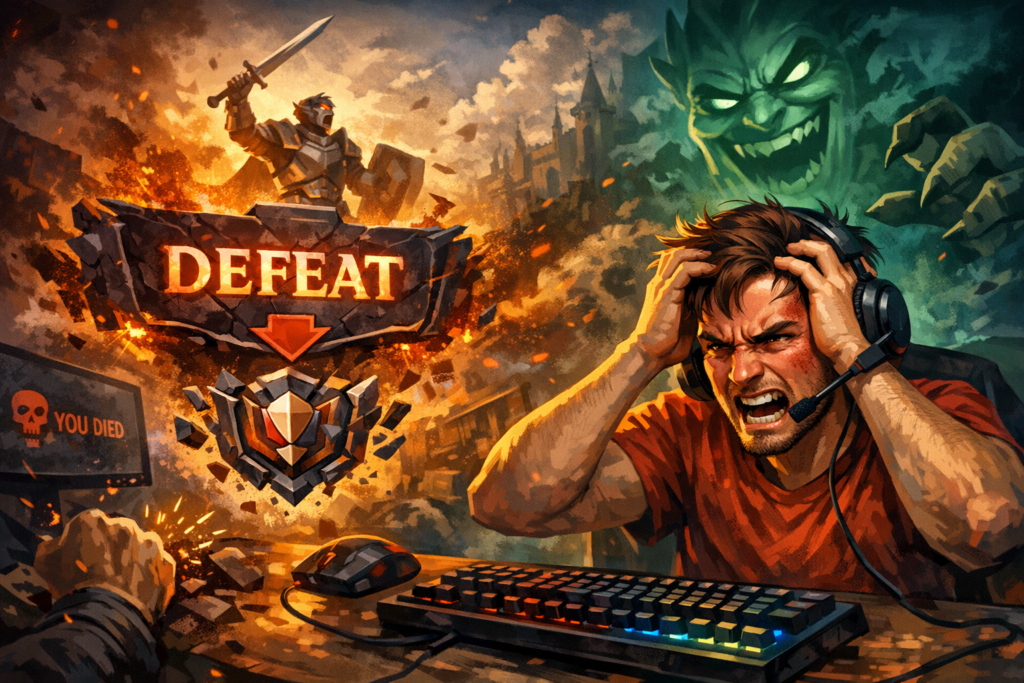
Ever felt your hands shaking after losing three rounds in a row? That burning frustration when your teammate whiffs an easy shot? Welcome to tilt—the silent rank killer that turns promising gaming sessions into nightmare losing streaks. But here’s the good news: managing tilt isn’t some magical skill reserved for pros. It’s a learnable ability that can transform your gameplay from emotional roller coaster to consistent performance.
This comprehensive guide breaks down exactly how to stop tilting and perform better when the pressure is on. Whether you’re grinding ranked in Valorant, pushing for Global Elite in CS2, or climbing the League of Legends ladder, these battle-tested strategies will help you keep your cool and play smarter.
Understanding Tilt: Why Your Brain Betrays You During Games
The term “tilt” originally came from pinball machines. When players got too aggressive and literally tilted the machine, it would lock up and end the game. In competitive gaming, tilt describes that mental state where emotions override rational decision-making. Your aim gets shaky, positioning becomes reckless, and suddenly you’re making rookie mistakes you’d never make with a clear head.
What makes tilt so dangerous isn’t just one bad play—it’s the downward spiral. You lose a round, get frustrated, make a poor decision in the next round, get more frustrated, and before you know it, you’ve dropped three ranks in one evening. Research from competitive gaming environments shows that tilted players stop learning from their mistakes because their brain switches into pure emotional reaction mode.
Think about your last major tilt session. Were you analyzing enemy positions and adapting your strategy? Probably not. You were likely playing on autopilot, repeating the same unsuccessful approaches while expecting different results. That’s tilt in action—and it’s costing you wins.
Recognizing Tilt Before It Destroys Your Rank
The best way to stop tilting is catching it early. Waiting until you’ve smashed your keyboard or flamed your entire team means you’re already deep in the danger zone. Professional players and successful streamers use simple mental checkpoints to identify when emotions are taking control.
The Three Question Mental Check
Ask yourself these questions honestly after each game:
- Am I actually having fun right now?
- Am I winning or at least improving my individual performance?
- Do I feel in control of my gameplay decisions?
If you answered “no” to any of these questions, you’re experiencing early warning signs of tilt. Other red flags include blaming teammates excessively, taking unnecessary risks for highlight plays instead of smart tactical moves, and feeling like you’re just going through the motions without thinking.
Physical Signs Your Body Is Tilting
Your body often knows you’re tilting before your conscious mind admits it. Watch for these physical indicators:
- Tension in shoulders, neck, or jaw
- Faster, shallower breathing
- Gripping your mouse or controller harder than necessary
- Feeling heat in your face or chest
- Restlessness or inability to sit still between rounds
Recognizing these signs gives you a crucial advantage. You can implement anti-tilt strategies before your rank takes a hit.
Immediate Reset Techniques: Stop The Bleeding Right Now
Once you’ve identified tilt, the worst thing you can do is queue up for another ranked match immediately. That’s like throwing gasoline on a fire and hoping it goes out. Instead, use these proven reset techniques that professional gamers swear by.
The Power of Strategic Breaks
Taking breaks isn’t quitting—it’s smart training. Research on esports athletes shows that over seventy percent of top performers deliberately take breaks when they notice tilt setting in. Here’s how to break effectively:
- After two consecutive losses, take a minimum five-minute break away from your screen
- Between ranked games, give yourself two to three minutes to mentally reset
- Use in-game downtime wisely—during buy phases or respawn timers, close your eyes and take deep breaths
- If you’re in full tilt mode, log out completely and do something completely different for at least thirty minutes
Breathing and Body Reset Methods
Your breathing directly affects your nervous system. When you’re tilted, your breathing becomes shallow and rapid, keeping you in fight-or-flight mode. Combat this with deliberate breathing exercises:
Try the 4-7-8 technique between games: breathe in through your nose for four counts, hold for seven counts, exhale through your mouth for eight counts. Repeat three times. This physiologically calms your nervous system and resets your mental state.
Physical movement helps too. Stand up, stretch your neck and shoulders, do some arm circles. Getting blood flowing to cramped muscles releases physical tension that contributes to mental stress.
The Communication Reset
Toxic teammates amplify tilt faster than anything else. When someone starts flaming in voice chat or spamming sarcastic messages, your options are simple:
- Mute them immediately without announcing it
- Focus your communication on positive, useful information only
- Compliment good plays from teammates—positivity is contagious and improves team performance
- Remember that arguing with toxic players never improves your chance of winning
Control what you can control. You can’t fix a toxic teammate’s attitude, but you can control whether their negativity affects your gameplay.
Quick Reference Anti-Tilt Action Plan
| Situation | Immediate Action | Why It Works |
|---|---|---|
| Lost two games in a row | Take five-minute break, drink water, stretch | Physically resets stress hormones and clears your mind |
| Teammate flaming in chat | Mute instantly, focus on your own gameplay | Eliminates external negativity you cannot control |
| Feeling autopilot mode | Switch to aim training or unranked games | Practices fundamentals without rank pressure |
| Complete mental breakdown | Log out, take a walk, read, or watch content | Full mental reset prevents further rank damage |
| Frustration with own mistakes | Review what happened, identify one fixable thing | Turns emotion into productive learning |
Building Long-Term Tilt Resistance: The Mindset Shift
Quick fixes help in the moment, but truly performing under pressure requires developing a tilt-resistant mindset over time. This means changing how you fundamentally think about competition, improvement, and success in gaming.
Redefine What Success Means
Here’s a truth bomb: you cannot win every game. Even professional players with god-tier mechanics lose matches regularly. If your only measure of success is whether you won or lost, you’re setting yourself up for constant disappointment and tilt.
Instead, focus on metrics you directly control:
- Did your crosshair placement improve this session?
- Did you make better trading decisions in team fights?
- Did you adapt your strategy when your initial approach failed?
- Did you maintain good communication even when losing?
- Did you review and learn from mistakes?
This approach, often called a growth mindset, keeps you focused on improvement rather than outcomes. Your rank will naturally follow skill development, but skill development doesn’t require winning every match.
The Power of Session Limits
Marathon gaming sessions feel productive, but they’re often counterproductive for ranked performance. Mental fatigue accumulates without you noticing, degrading your reaction time, decision-making, and emotional control.
Set hard limits before you start playing. Many high-level players cap themselves at two to three ranked matches per session. If they hit a losing streak, they stop ranked entirely and either practice mechanics in training modes, play casual matches with friends, or simply log off.
This discipline seems counterintuitive—shouldn’t you grind more to rank up faster? But quality beats quantity. Three focused, tilt-free matches will improve your rank more than ten tilted games where you’re not learning or performing well.
Keep a Tilt Journal for Pattern Recognition
Professional poker players pioneered this technique, and it translates perfectly to competitive gaming. After sessions where you experienced tilt, write down:
- What triggered the tilt? (Specific plays, teammate behavior, losing streak)
- How did your gameplay change when tilted?
- What could you have controlled differently?
- What external factors contributed? (Tired, hungry, distracted)
Over time, patterns emerge. Maybe you always tilt when playing late at night. Perhaps certain maps or game modes trigger frustration. Maybe you’re more tilt-prone when solo queuing versus playing with friends. Identifying these patterns lets you proactively avoid tilt triggers.
Performing Under Pressure: When Stakes Are Highest
Pressure situations—rank-up games, tournament matches, clutch rounds—intensify everything. The same situations that might cause mild tilt in casual play can trigger full meltdowns when more is on the line. Here’s how to handle high-pressure scenarios.
Pre-Game Mental Preparation
Top performers don’t just show up and hope for the best. They deliberately prepare mentally before important matches. Spend three to five minutes before queuing to:
- Visualize yourself making good plays and staying calm under pressure
- Remind yourself why you enjoy the game beyond just winning
- Set specific performance goals unrelated to match outcome
- Do a brief physical warm-up—aim training, stretching, breathing exercises
This ritual creates psychological separation between your everyday mindset and your competitive performance state. You’re signaling to your brain that it’s time to focus and perform.
In-Game Pressure Management
When you’re in the middle of a high-stakes match and pressure mounts, use these real-time techniques:
“This is just one round, one game, one rank. It’s not defining my worth as a player or person. I’ve won tough situations before, I can do it again. Focus on the next play, not the outcome.”
Positive self-talk isn’t cheesy—it’s scientifically proven to improve performance under stress. Your internal dialogue shapes your emotional state, which directly affects your gameplay.
Between rounds, take those deep breaths. Shake out your hands. Reset your posture. These micro-resets prevent stress accumulation throughout the match.
Post-Pressure Recovery
Whether you won or lost that high-pressure game, you need recovery time. Your nervous system just ran a marathon. Don’t immediately queue into another ranked match while adrenaline is still pumping.
Take at least ten to fifteen minutes between intense matches. Win or lose, process what happened, acknowledge your emotions, then consciously let them go before the next game.
Environmental and Lifestyle Factors That Affect Tilt
Your gaming performance doesn’t exist in a vacuum. Physical and environmental factors significantly impact your emotional regulation and tilt susceptibility.
Physical Health Basics
This sounds boring, but it’s crucial: sleep, nutrition, and hydration directly affect your tilt resistance. Playing ranked while sleep-deprived, hungry, or dehydrated is voluntarily handicapping your emotional control.
- Aim for consistent sleep schedules, especially before important gaming sessions
- Eat a proper meal before extended gaming sessions—low blood sugar kills emotional regulation
- Keep water nearby and actually drink it regularly
- Limit caffeine to moderate amounts—too much increases anxiety and emotional volatility
Gaming Environment Optimization
Your physical gaming space affects mental state more than you realize. Small improvements make big differences:
- Good lighting reduces eye strain and fatigue
- Comfortable temperature—too hot or cold is distracting and irritating
- Minimize outside distractions and interruptions during ranked sessions
- Consider background music that helps you focus—many players swear by lo-fi or ambient tracks
Social Gaming Dynamics
Who you play with massively impacts tilt levels. Solo queue exposes you to random teammates, including toxic players who accelerate tilt. Finding even one consistent duo partner dramatically improves the experience.
Look for teammates who share your mindset about improvement and emotional control. Playing with friends who also tilt easily just creates a negative feedback loop where everyone spirals together. But gaming with positive, level-headed players creates the opposite effect—their calm mentality helps keep you grounded.
Advanced Mental Game Strategies
Once you’ve mastered the basics, these advanced techniques can take your mental game to the next level.
Proactive Emotional Regulation
Instead of waiting for tilt to happen then reacting, top performers proactively manage emotions throughout matches. This means consciously checking in with your emotional state every few rounds, even when things are going well.
Ask yourself: “How am I feeling right now? Any tension building?” Catching stress early, before it becomes tilt, gives you way more control.
Reframing Losses as Data
Every loss contains valuable information about what you need to improve. Professional players watch their own replays not to beat themselves up, but to identify specific, fixable mistakes.
When reviewing losses, use this framework: “What did I do? What should I have done? What will I do next time?” This converts frustration into actionable improvement steps.
Building Tilt Resistance Through Variety
Playing only ranked matches actually increases tilt vulnerability because every game feels high-stakes. Mix in different game modes and activities:
- Casual matches where you practice specific skills without rank pressure
- Custom games to learn maps and mechanics
- Aim training to improve fundamentals
- Watching educational content from pros
This variety keeps gaming fresh and reminds you that improving is about more than just your rank number.
Creating Your Personal Anti-Tilt System
Everything in this guide works, but only if you actually implement it. Reading about tilt management doesn’t help if you ignore everything the moment you lose a round. You need a personal system—specific actions you commit to taking.
Start simple. Pick three techniques from this guide that resonate most with you. Write them down. Make them your non-negotiable rules for the next week of gaming. Maybe it’s “take breaks after two losses,” “mute toxic teammates instantly,” and “focus on one improvement goal per session.”
Track your results. Notice how your gaming experience changes when you consistently apply anti-tilt strategies. Most players report not just better performance, but actually enjoying gaming more—which was the whole point to begin with.
Tilt will still happen sometimes. You’re human. But with these tools, it becomes a minor inconvenience instead of a rank-destroying catastrophe. You’ll catch it earlier, recover faster, and maintain the clear-headed mindset that separates good players from great ones.
The difference between tilted players and tilt-proof players isn’t that one group never experiences frustration. It’s that tilt-proof players have systems for managing frustration before it damages their performance. Now you have those systems too. Time to put them into practice and watch your gameplay transform.
What is tilt in gaming and why does it happen?
Tilt is an emotional state where frustration and anger override rational decision-making during gameplay. It happens when losses, mistakes, or teammate behavior trigger emotional responses that cloud judgment. Your brain shifts from analytical thinking to reactive emotional mode, causing performance to decline further. The term comes from pinball machines that would lock up when tilted too aggressively.
How do I know if I’m tilting during a game?
Common signs include blaming teammates excessively, making reckless plays instead of smart tactical decisions, playing on autopilot without thinking, physical tension in your body, faster breathing, and not enjoying the game anymore. Ask yourself three questions: Am I having fun? Am I winning or improving? Do I feel in control? If you answer no to any, you’re likely experiencing tilt.
What should I do immediately when I notice I’m tilting?
Take an immediate break from ranked play for at least five minutes. Step away from your screen, do deep breathing exercises, stretch your body, drink water, and physically reset. If you lost two games in a row, take a longer break or switch to unranked matches or aim training. Never queue into another ranked match while emotionally activated from the previous game.
How can I perform better under pressure in important matches?
Prepare mentally before matches by visualizing successful plays and setting performance goals unrelated to winning. During matches, use positive self-talk, take deep breaths between rounds, and focus only on what you can control. Remember that pressure is just amplified emotion—the same anti-tilt techniques work, you just need to apply them more deliberately. Practice performing under pressure by treating some unranked matches as if they matter to build mental resilience.
How many ranked games should I play in one session?
Most high-level players recommend limiting ranked sessions to two or three matches to maintain mental freshness and emotional control. Quality beats quantity—three focused, tilt-free games will improve your rank more than ten tilted matches. If you hit a losing streak, stop playing ranked entirely for that session. Set this as a hard limit before you start playing so you’re not making decisions while tilted.
Does playing with friends help prevent tilt?
Playing with positive, level-headed friends significantly reduces tilt compared to solo queue. Good teammates provide emotional support, reduce exposure to toxic players, and create a more enjoyable experience. However, playing with friends who also tilt easily can create negative feedback loops. Choose duo partners who share your mindset about improvement and maintaining composure under pressure.
How do physical factors like sleep and food affect tilt?
Sleep deprivation, hunger, and dehydration directly impair emotional regulation, making you far more susceptible to tilt. Your brain needs proper rest, nutrition, and hydration to maintain the self-control required for competitive gaming. Playing ranked while physically depleted is voluntarily handicapping your mental game. Prioritize consistent sleep schedules, eat proper meals before gaming sessions, stay hydrated, and moderate caffeine intake for optimal emotional control.
Comments (0)
Sign In / Sign Up
Sign in with your Google account to leave a comment. It's fast, easy, and secure.
No comments yet
Be the first one to share your thoughts!